By: Dianne Crocker, LightBox research director and Alan Agadoni, senior VP, LightBox EDR
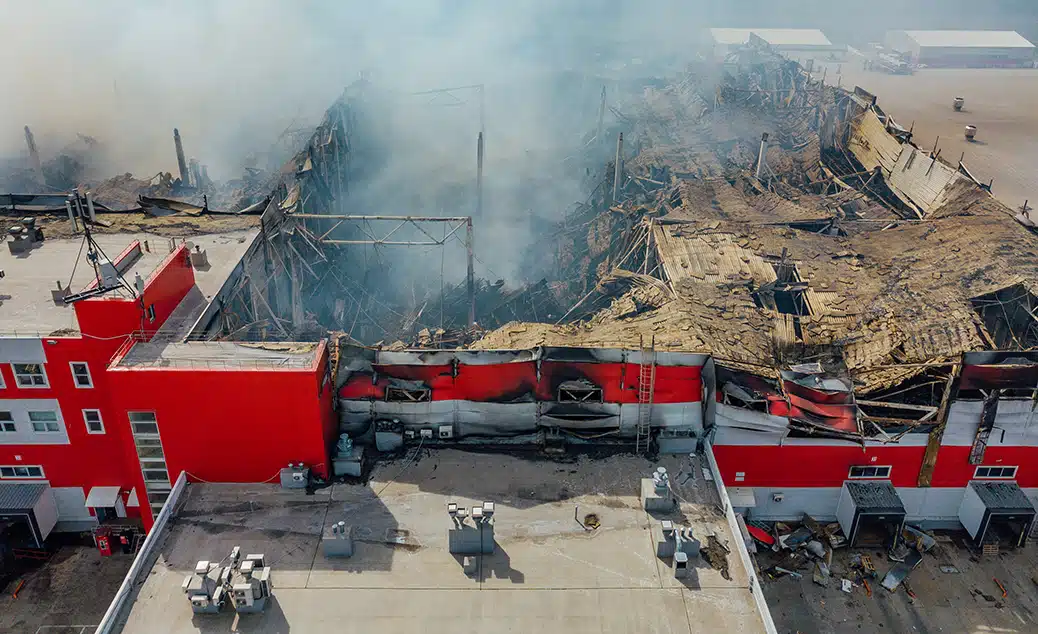
The growing intensity and frequency of fire events, both wildfires and urban conflagrations, are transforming the risk landscape for commercial real estate (CRE) professionals. Climate change, increased urbanization in fire-prone areas, and aging infrastructure have led to a marked rise in fires that not only cause property damage but can trigger releases of hazardous substances that can present acute and chronic health risks, creating challenges for property owners, insurers, regulators, and environmental consultants.
Marty Walters, a wildfire and hazardous materials expert at Recovery Risk, has seen how these shifts are driving new technical demands. “We’ve seen a dramatic increase in the number of wildfires that have spread into urban conflagrations over the last 10 years,” she said. “With each new wildfire, we’re learning just how little we really understand about the ways that hazardous materials impact our communities in the wake of these events, but the good news is that we’re also learning how to approach these kinds of problems with tools we’ve been developing for decades.”
Understanding the risk posed by smoke and ash particles in fire debris is increasing focus on the need to construct buildings that are more resilient to wildfires. The goal is to minimize community exposure to residual contaminants such as lead, arsenic, and asbestos, especially in urban areas where pollution levels are already elevated.
How CRE Professionals Are Evaluating Fire Risk
As fire risk expands into new regions and property types, these are the key strategies shaping how the market responds.
1. Regulatory Standards Governing Fire-Related Toxic Releases
Several federal standards address the release of hazardous substances due to fire. The EPA’s Risk Management Program (40 CFR 68), OSHA’s Process Safety Management Standard (29 CFR 1910.119), and the Resource Conservation and Recovery Act (RCRA) are actively being used to manage post-fire hazardous releases. EPCRA requirements also apply when fire-related chemical events affect the surrounding community.
Fire debris is increasingly treated as hazardous waste, requiring oversight and coordinated response. In Hawaii, the aftermath of the 2023 Lahaina fire revealed the challenges of conducting hazardous materials cleanup in remote geographies lacking adequate disposal infrastructure. In California, fires over the past five years have triggered emergency response and environmental monitoring protocols that overlap with broader air quality and hazardous materials regulations.
As these frameworks evolve, consultants are navigating more complex permitting and cleanup plans. Multi-agency involvement is extending timelines and adding new layers to post-fire remediation.
2. Fire Risk Is Changing Valuation and Capital Flow
Insurance carriers are adjusting to rising fire losses by re-evaluating premiums, policy limits, and geographic exclusions. In high-risk regions such as California’s Wildland-Urban Interface (WUI) zones, areas where residential and commercial development borders undeveloped wildland, some insurers have reduced coverage availability or exited the market entirely. Premiums are increasing, exclusions are broadening, and policy limits are tightening. These changes are pushing lenders to evaluate fire exposure earlier in the transaction process and request supporting documentation during diligence.
Properties lacking mitigation strategies, such as defensible space, fire-resistant construction, or documented cleanup history, face delays and potentially discounted valuations. Buyers, especially institutional capital, are raising fire risk in preliminary reviews. Lenders are requiring more site-specific data, and deals involving properties with unresolved fire events are often pushed to a second tier of risk assessment.
3. Environmental Due Diligence Is Expanding in Scope
In the world of commercial real estate transactions, the ASTM E1527-21 standard governs the conduct of Phase I Environmental Site Assessments (ESA). While the standard practice doesn’t detail exactly how consultants should evaluate impacts from fire, including conducting historical fire history research, it outlines a standardized process of assessing Recognized Environmental Conditions (RECs) related to hazardous releases at or around a target property.
Environmental professionals are expected to identify signs of fire damage such as scorched earth, charred tanks, and soot deposits that likely resulted in releases of hazardous substances. They can also consult local fire department records as well as review changes visible on Sanborn fire insurance maps and aerial photographs that could be indications of past fires. The standard’s requirement for an environmental professional to provide thorough documentation, including photographs and site diagrams, should ensure that any known fire-related risks are fully understood and disclosed during environmental due diligence.
4. Fire History Data Is Being Used to Guide Evaluation
Access to fire history data can be used to allow consultants to better evaluate site exposure and prioritize risk management strategies. The National Fire Incident Reporting System (NFIRS) is a core data source for assessing historical risk and response activity. The database includes detailed reports from more than 22,000 fire departments, covering incident causes, suppression tactics, and hazardous material releases.
The National Transportation Safety Board (NTSB) also maintains data relevant for sites near transit corridors or airports. Although not CRE-specific, these records are helpful for evaluating collateral exposure to secondary fire events.
Fire history is shaping everything from sampling plans to recommendations for future development. Environmental teams are using these sources to determine whether prior fire activity may have contributed to subsurface contamination or unregulated material dispersal.
Fire Resilience Requires Proactive Assessment
Environmental consultants are navigating higher expectations around fire-related risk. Clients are asking for earlier insight, more detailed documentation, and stronger confidence in site histories. Consultants who integrate fire risk into their standard assessment process will be equipped to respond faster and with greater precision as the regulatory and financial landscape continues to shift.
NOTE TO READERS
This blog is an excerpt from the Inside the Industry column authored by Dianne Crocker, LightBox’s research director, and Alan Agadoni, senior VP, LightBox EDR published monthly by the Air & Waste Management Association in its EM magazine. The column covers a mix of timely business, strategic, and technical topics impacting the world of environmental management.
The full article appears in the August 2025 issue of EM Magazine, a copyrighted publication of the Air & Waste Management Association (www.awma.org), and is accessible in its entirety here in the full-issue PDF that can be downloaded and printed, or via AWMA’s online, interactive EM flipbook.
