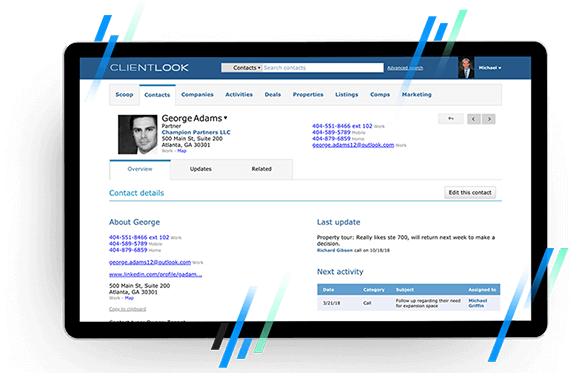

What is a commercial real estate database?
A commercial real estate database is a centralized system that helps commercial real estate professionals store, search, and manage property data. It combines commercial property details, ownership information, transaction history, and market data so brokers, investors, and teams can move faster. ClientLook is a commercial real estate database software that helps you build a proprietary commercial property database with accurate, up-to-date information in one place.
Why a Commercial Real Estate Database Matters
In the commercial real estate market, data is often a firm’s most valuable asset. A reliable commercial real estate database improves data accuracy, supports market analysis, and helps teams verify ownership and track valuation data. With quick access to property owners, listings, and transactions, teams reduce risk and uncover new opportunities across deals, leasing, and sales.
What to Include in a Complete Commercial Real Estate Database
A strong CRE database should include all the information commercial real estate professionals need to manage properties, clients, and deals efficiently, such as:
- Commercial property details including square footage, zoning, property types, and property characteristics
- Ownership information, loan amount data, and transaction history
- Contact data for owners, brokers, investors, and other professionals
- Listings, lease details, and sale activity across industrial and other asset classes
- Reporting tools, analytics, and real-time alerts to support deal management and marketing efforts
When built correctly, a commercial real estate database becomes a scalable system that helps teams manage resources, support investment decisions, and generate value across the business.
Build your own proprietary commercial real estate database within ClientLook®. Capture property features, availability, images, contacts then keep everything accessible company-wide as your database grows.
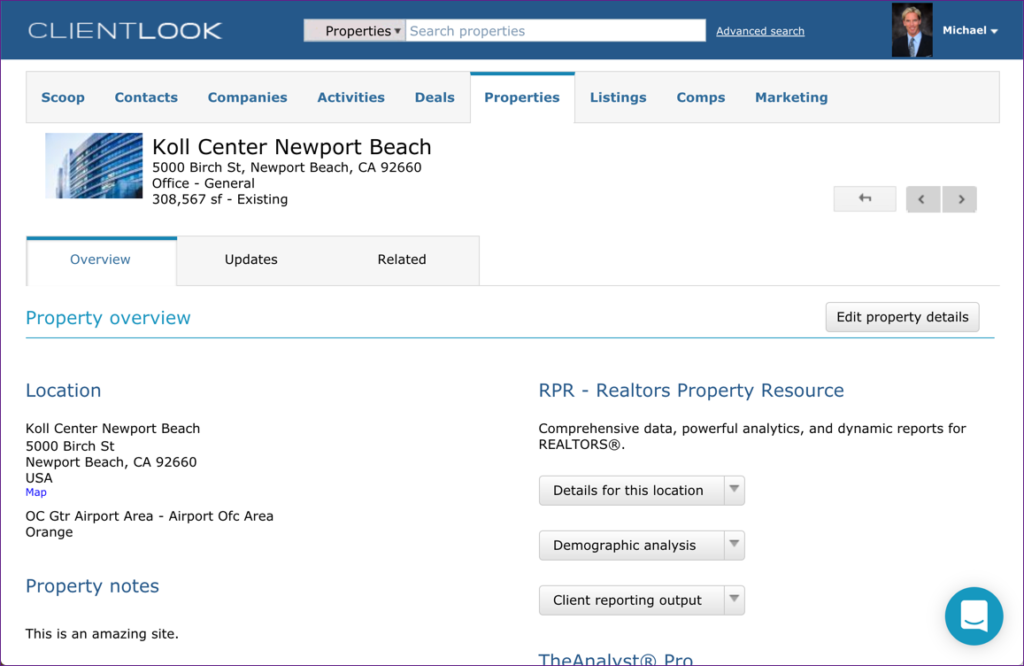
Every property detail
Maintaning your own commercial real estate database is one of the best ways to create a competitive advantage. ClientLook® makes this easy and super intuitive. Manually add properties or import data from 3rd party research providers.
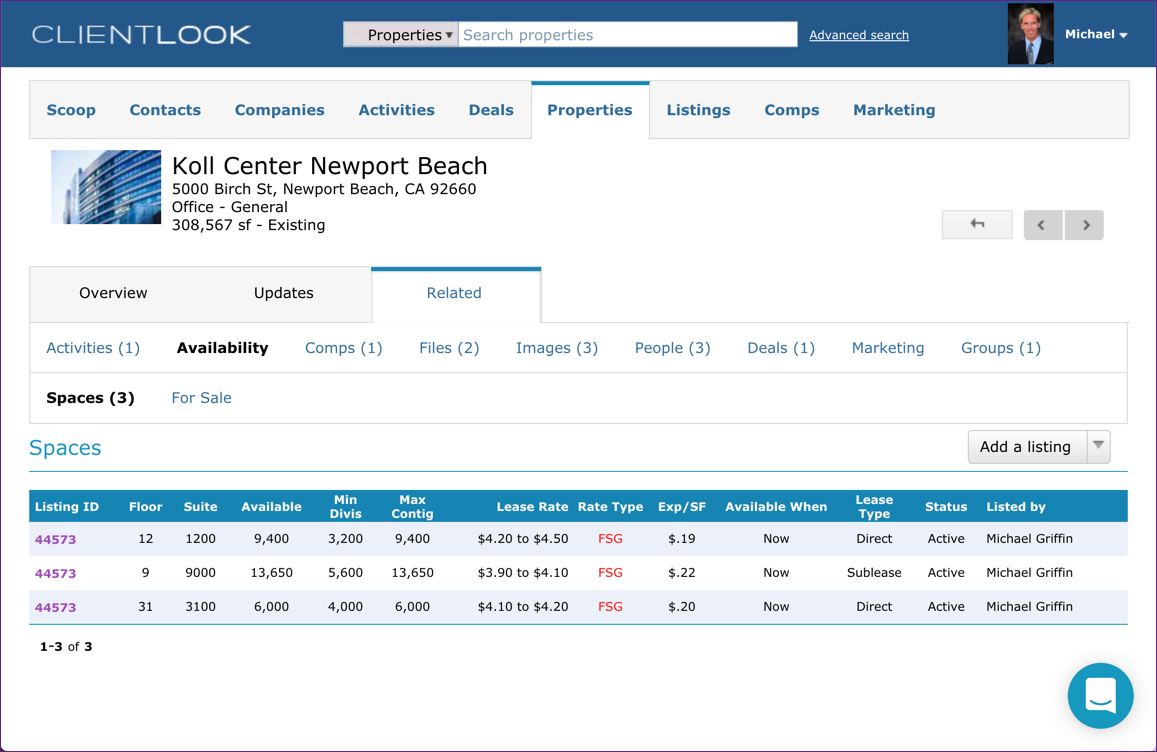
Real-time availability
View availability for any property. Track your own in-house listings company-wide. Create new listings without any redundant data entry. Create the most comprehensive commercial real estate database in your market using a single, centralized platform.
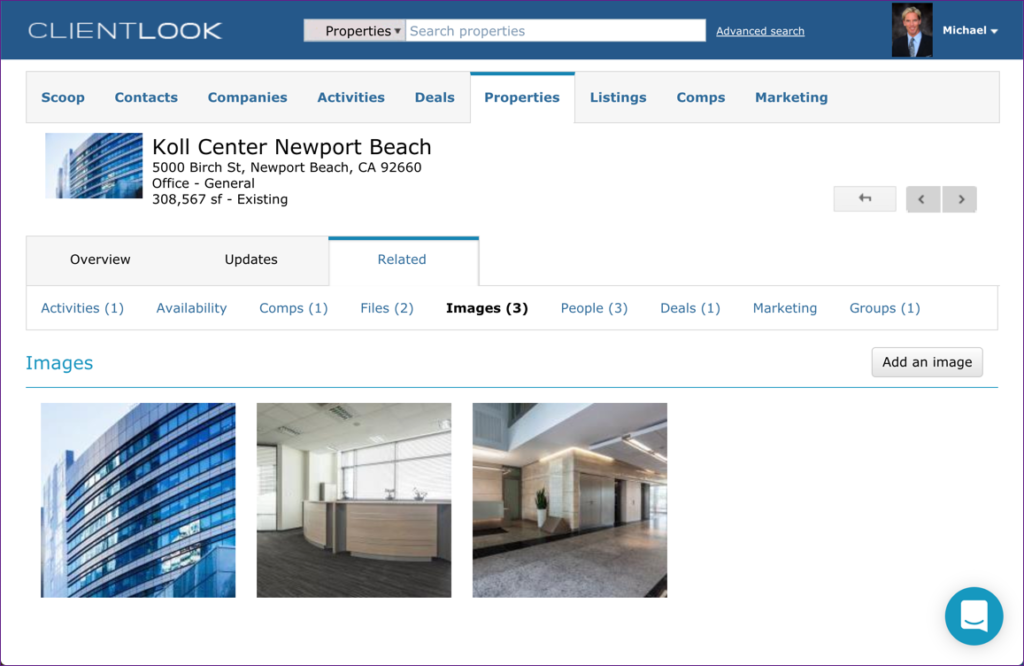
Relate images and files
Add unlimited images and files to your properties for the most complete commercial real estate database. Media is easily accessible for quick quick reference across your commercial real estate database software.
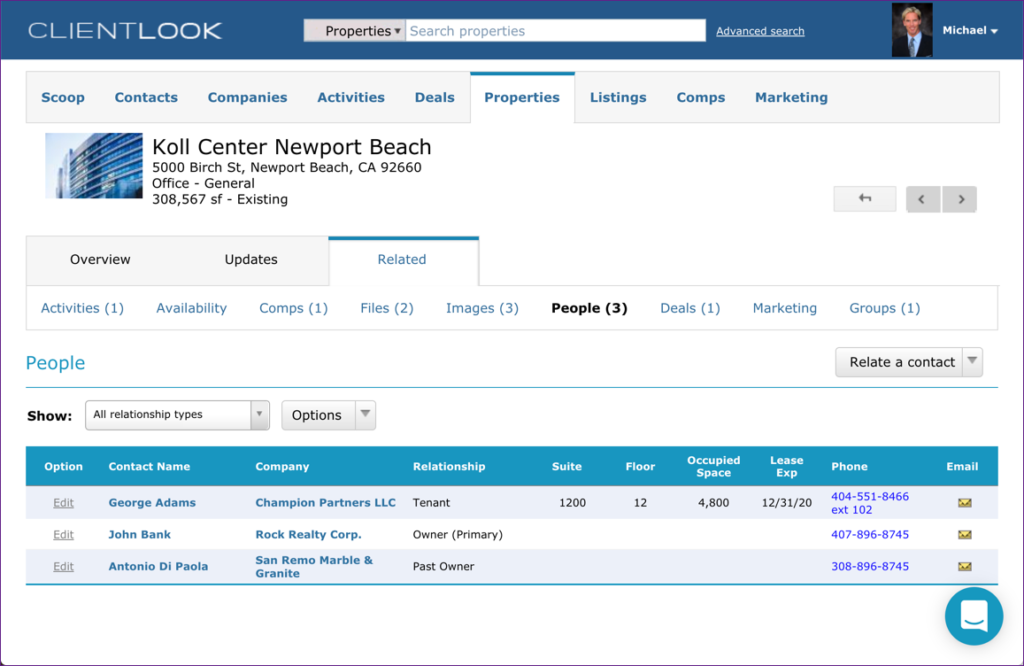
Relate people
It’s easy to create relationships between people and properties. Connect owners, tenants, property managers, brokers, prospects and more. Track floor-by-floor tenant occupancy with lease expirations within your database.
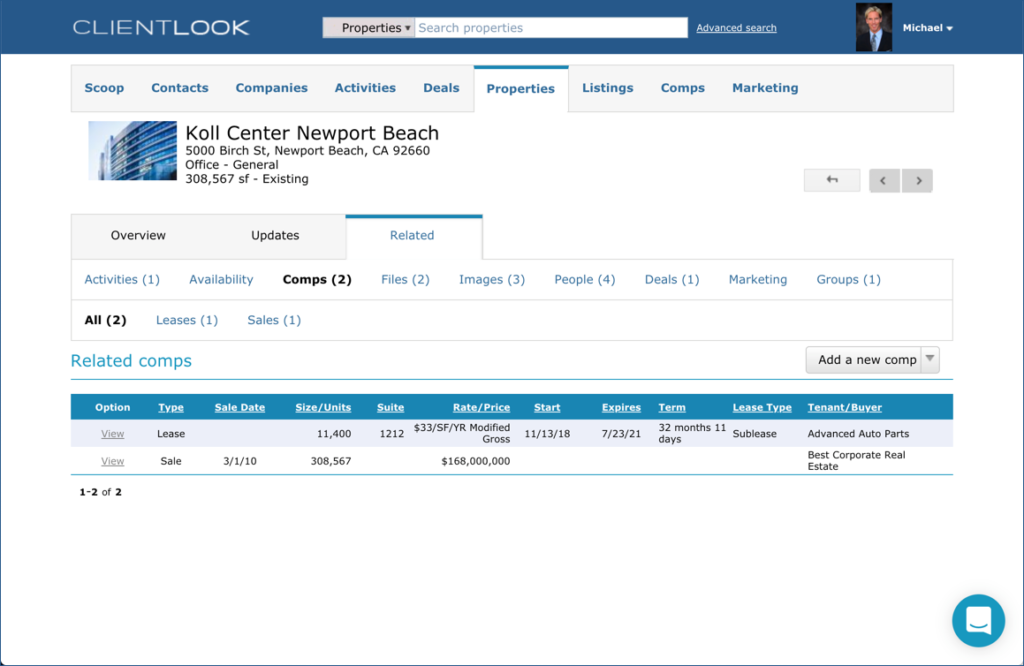
Connect comps
Track sale and lease transactions in the ClientLook® comps module and relate those deals to properties. Gain instant access to market info so you’re always informed with everything in one place.
Frequently Asked Questions
What is a commercial real estate database used for?
A commercial real estate database is used to store, organize, and search property data, ownership information, listings, and transactions so brokers and teams can manage deals and market activity more efficiently.
Who uses a commercial real estate database?
Commercial real estate databases are used by brokers, investors, property managers, analysts, and other commercial real estate professionals across leasing, sales, and investment roles.
What data should a commercial real estate database include?
It should include property details, ownership information, square footage, zoning, availability, transaction history, contacts, images, and supporting documents.
How is a commercial real estate database different from public listing platforms?
A commercial real estate database is proprietary and customizable, while public listing platforms rely on shared data. A proprietary database gives firms more control over data accuracy and access.
Can a commercial real estate database improve data accuracy?
Yes. Centralizing property and contact data in one system reduces duplication, outdated information, and manual errors across teams.
How does a commercial real estate database support market analysis?
By combining property data, transaction history, and availability, a commercial real estate database helps teams analyze trends, demand, and opportunities within the commercial real estate market.
Is a commercial real estate database useful for investors?
Yes. Investors use commercial real estate databases to evaluate properties, review transaction history, assess risk, and identify new investment opportunities.
Can multiple users access the same commercial real estate database?
Most commercial real estate database software allows company-wide access so teams can collaborate, share updates, and work from the same information.
How does a commercial real estate database help with deal management?
It connects properties, contacts, listings, and transactions in one place, making it easier to track deals, manage leads, and move opportunities through the pipeline.
Why build a proprietary commercial real estate database?
Building a proprietary commercial real estate database gives firms full ownership of their data, improves long-term value, and reduces reliance on third-party data sources.
